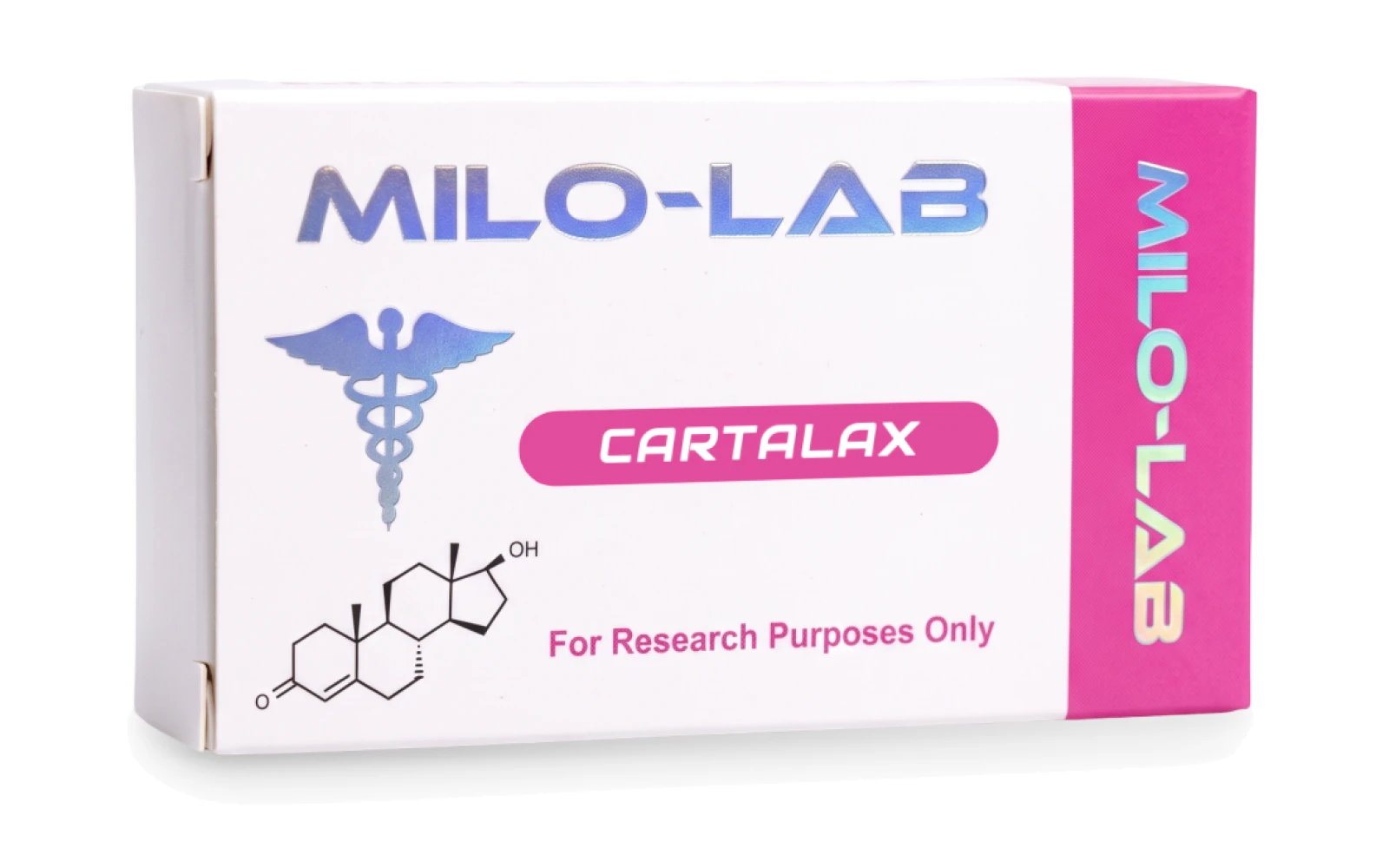
Cartalax
Cartalax (Ala-Glu-Asp, AED) is a Khavinson short-peptide bioregulator studied in cell cultures for gene expression in stem cells and aging fibroblasts.
1 vial · 20 mg total
Checking availability…
Total Price
฿2100


 & more more: Bancontact, Open Banking, Cash App, Afterpay, more coinsCrypto −5%Encrypted checkout
For research & laboratory use only. Not for human consumption.
Shipping: free within Thailand, ฿700 worldwide. Added at checkout. Delivery times & countries
Half-Life
Unknown
Short-Peptide Bioregulator
Ala-Glu-Asp tripeptide of the Khavinson family, studied for gene-expression effects
Connective-Tissue Context
Described as derived from a cartilage polypeptide complex
Aging-Culture Models
Studied in stem-cell and fibroblast cultures during replicative aging
Mechanism of Action
Scientific Research
Why Researchers Study Cartalax
Cartalax is the synthetic tripeptide Ala-Glu-Asp (AED), developed in the Khavinson short-peptide programme. It is the three-amino-acid core of Epitalon (Ala-Glu-Asp-Gly), and it is described as derived from a cartilage polypeptide complex, which is why it is usually discussed in the context of connective tissue and cell aging.
Proposed Mechanism
The working hypothesis behind this peptide family is that very short peptides can cross the cell membrane and interact with DNA-associated proteins at gene promoters, adjusting the transcription of specific genes. Cartalax is therefore studied as a gene-expression modulator rather than as a receptor ligand.
What the Research Shows
Published work on AED is limited and entirely preclinical:
- Mesenchymal stem cells (2020): Ashapkin and colleagues tested AED, KED and KE on aged human embryonic mesenchymal stem cell cultures and measured IGF1, FOXO1, TERT, TNKS2 and NF-kB expression. The short peptides raised IGF1 expression roughly 3.5 to 5.6 fold in both aging models, and all three increased NF-kB expression.
- Skin fibroblasts (2020): Fridman and colleagues compared the KE and AED peptides on the functional activity of human skin fibroblasts during replicative aging in vitro.
These are cell-culture results from a small number of papers, mostly from one research group. They do not show an effect in animals or people, and independent replication is limited.
Relationship to Epitalon
Epitalon (Ala-Glu-Asp-Gly) adds a glycine to the AED sequence. Both belong to the same bioregulator family, and they are often compared in gene-expression work on aging cell models.
Handling & Reconstitution
Supplied as a lyophilised powder in a 20mg vial. Reconstitute with bacteriostatic water, adding it slowly against the vial wall, and swirl gently until dissolved without shaking. Keep lyophilised vials refrigerated; after reconstitution store at 2 to 8 °C and protect from light.
For research purposes only. Not for human consumption.
Product FAQs
Related Products
Epitalon
Epitalon (epithalon) is a synthetic Ala-Glu-Asp-Gly tetrapeptide studied for telomerase activation, pineal regulation and longevity research.
Pinealon
Pinealon (Glu-Asp-Arg, EDR) is a Khavinson short-peptide bioregulator studied for neuroprotection, melatonin support and reduced neuronal oxidative stress.
BPC-157
BPC-157 (Body Protective Compound) is a stable pentadecapeptide derived from human gastric juice, researched for tendon, gut and tissue repair.
GHK-Cu
GHK-Cu (glycyl-L-histidyl-L-lysine) is a naturally occurring copper-binding tripeptide that drives collagen synthesis, skin repair and wound healing.