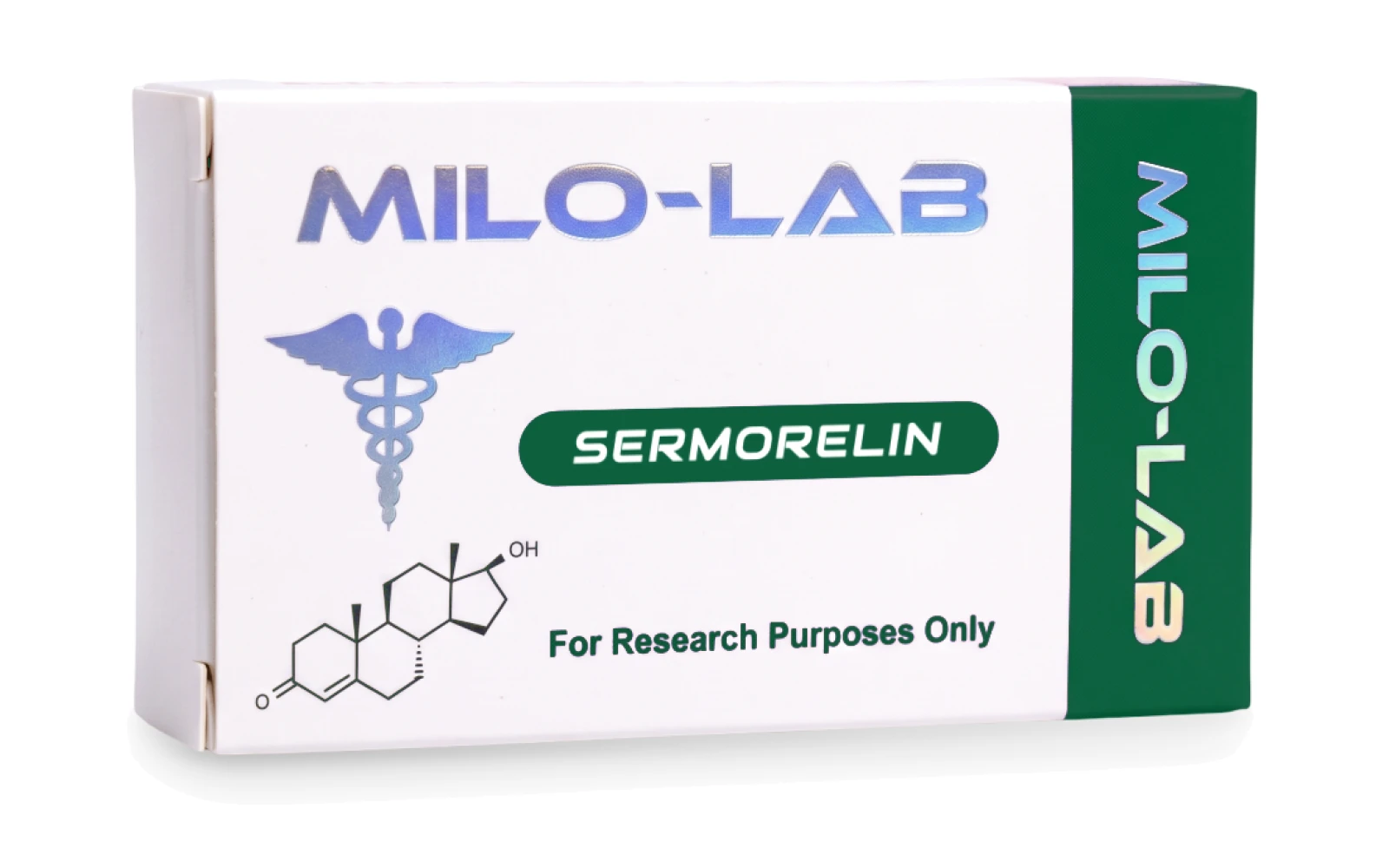
Sermorelin
Sermorelin (GRF 1-29) is a synthetic GHRH-analogue peptide that binds the GHRH receptor on pituitary somatotrophs.
1 vial · 5 mg total
Checking availability…
Total Price
฿800


 & more more: Bancontact, Open Banking, Cash App, Afterpay, more coinsCrypto −5%Encrypted checkout
For research & laboratory use only. Not for human consumption.
Shipping: free within Thailand, ฿700 worldwide. Added at checkout. Delivery times & countries
Half-Life
~7-12 minutes
Natural GHRH Sequence
First 29 amino acids of endogenous growth hormone-releasing hormone
Somatostatin-Gated Signalling
Native GHRH sequence, so GH release stays subject to somatostatin feedback
GHRH(1-29) Fragment
Shortest sequence retaining full GHRH receptor activity
Mechanism of Action
Research Overview
Sermorelin is the GHRH(1-29) peptide with the deepest pharmacological literature, which makes it a reference compound for the GHRH receptor. Common research directions include:
- GHRH-receptor signalling and pituitary somatotroph responsiveness
- Pulsatile versus continuous GH-release dynamics
- GHRH receptor signalling and downstream IGF-1 expression
- Benchmarking against modified analogues such as CJC-1295 and tesamorelin
Why the GHRH(1-29) Fragment is Enough
Native GHRH is 44 amino acids long, but its activity is concentrated in the N-terminal segment:
- Residues 1-29: receptor binding and full biological agonist activity
- Residues 30-44: dispensable for receptor activation, with a possible role in molecular stability
Because the 1-29 fragment retains full potency at the GHRH receptor, sermorelin behaves as a functional equivalent of full-length GHRH while being far simpler to synthesise as a research peptide.
Pulsatile Release and Somatostatin Feedback
The short ~7-12 minute half-life is a feature of the native sequence:
- The hypothalamus normally releases GHRH in pulses across the day
- Between pulses, somatostatin (SRIF) tone suppresses GH release
- Sermorelin, like native GHRH, acts mainly during the low-somatostatin windows
- GH release therefore stays subject to somatostatin feedback
Storage
Lyophilised vials: store at -20°C, protected from light.
For research purposes only. Not for human consumption.
Product FAQs
Related Products
CJC-1295 (no DAC)
CJC-1295 without DAC (Mod GRF 1-29) is a short-acting GHRH analogue that binds the pituitary GHRH receptor (Gs/cAMP) on somatotrophs.
Ipamorelin
Ipamorelin is a pentapeptide GHRP that binds the ghrelin receptor GHS-R1a without reported ACTH, cortisol or prolactin co-release in preclinical studies.
Tesamorelin
Tesamorelin is a synthetic GHRH(1-44) analogue with an N-terminal trans-3-hexenoyl group that resists DPP-4 cleavage. Research compound.
Research Tools