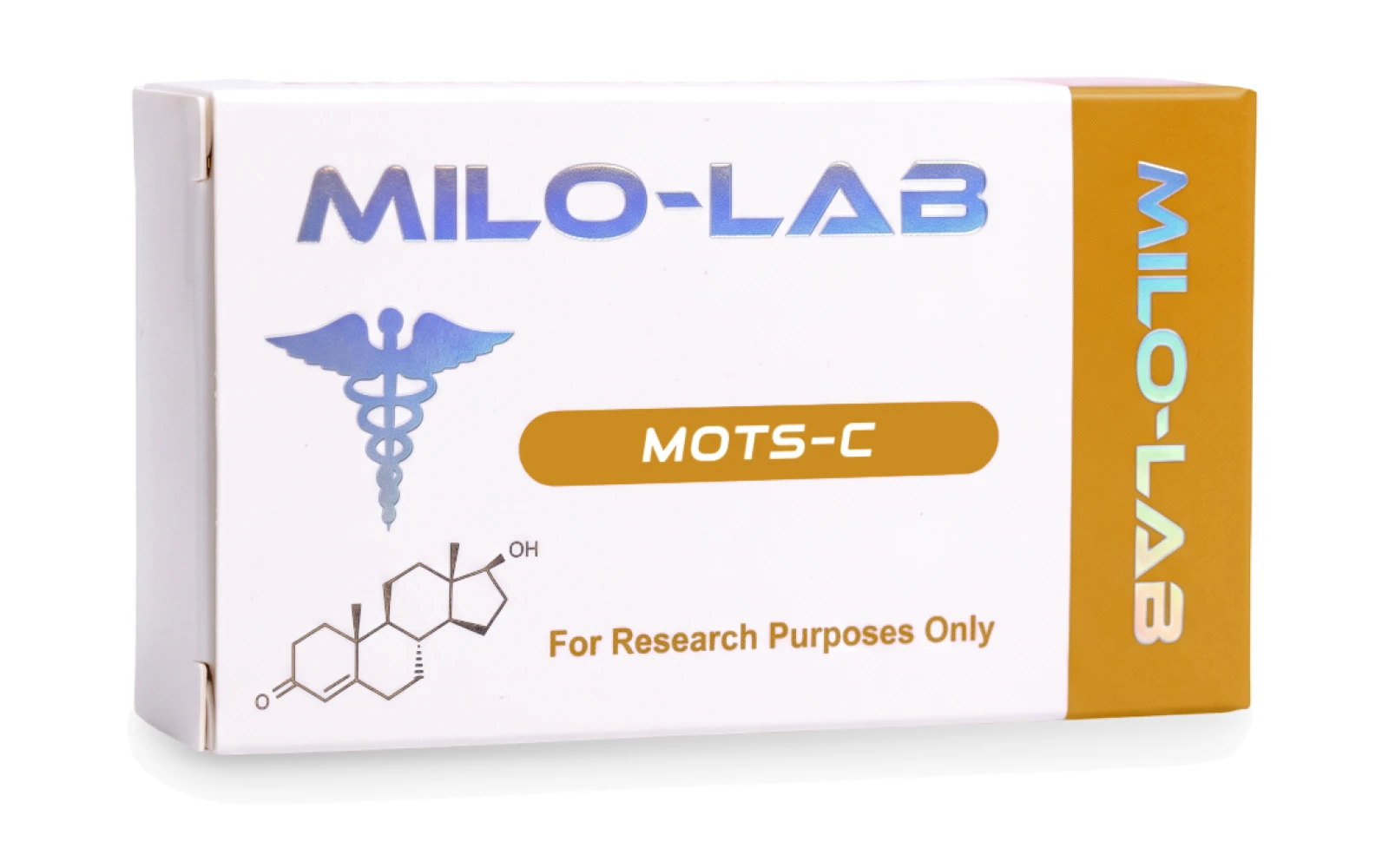
MOTS-c
MOTS-c is a 16-amino-acid mitochondrial-derived peptide encoded in the 12S rRNA gene, studied for AMPK pathway signalling in cell models.
1 vial · 40 mg total
Checking availability…
Total Price
฿3200


 & more more: Bancontact, Open Banking, Cash App, Afterpay, more coinsCrypto −5%Encrypted checkout
For research & laboratory use only. Not for human consumption.
Shipping: free within Thailand, ฿700 worldwide. Added at checkout. Delivery times & countries
Mitochondrial Hormone
Mitochondria-encoded peptide that regulates nuclear gene expression
AMPK Pathway
Activates AMPK signalling via folate-cycle inhibition and AICAR accumulation
Folate-Methionine Cycle
Acts on the folate-methionine cycle of one-carbon metabolism
Mechanism of Action
Why Researchers Choose MOTS-c
MOTS-c is one of the first mitochondrial-derived peptides (MDPs) to be characterised, and it has become a reference tool wherever mitochondrial signalling is investigated. It appears across several research lines:
- Mitochondrial retrograde signalling and AMPK pathway studies
- AICAR accumulation and AMPK activation in cell-based assays
- Folate-methionine cycle and one-carbon metabolism studies
- Antioxidant response element binding and NRF2-linked transcription in cell models
- Mitochondria-derived peptide biology and mitochondria-to-nucleus communication
Storage
Lyophilised vials: store at -20°C, protected from light.
For research purposes only. Not for human consumption.
Product FAQs
Related Products
SS-31
SS-31 (elamipretide) is a mitochondria-targeted tetrapeptide that binds cardiolipin in the inner mitochondrial membrane.
NAD+
NAD+ (nicotinamide adenine dinucleotide) is the central redox coenzyme and a substrate for sirtuin and PARP enzymes. Research compound.
Research Tools