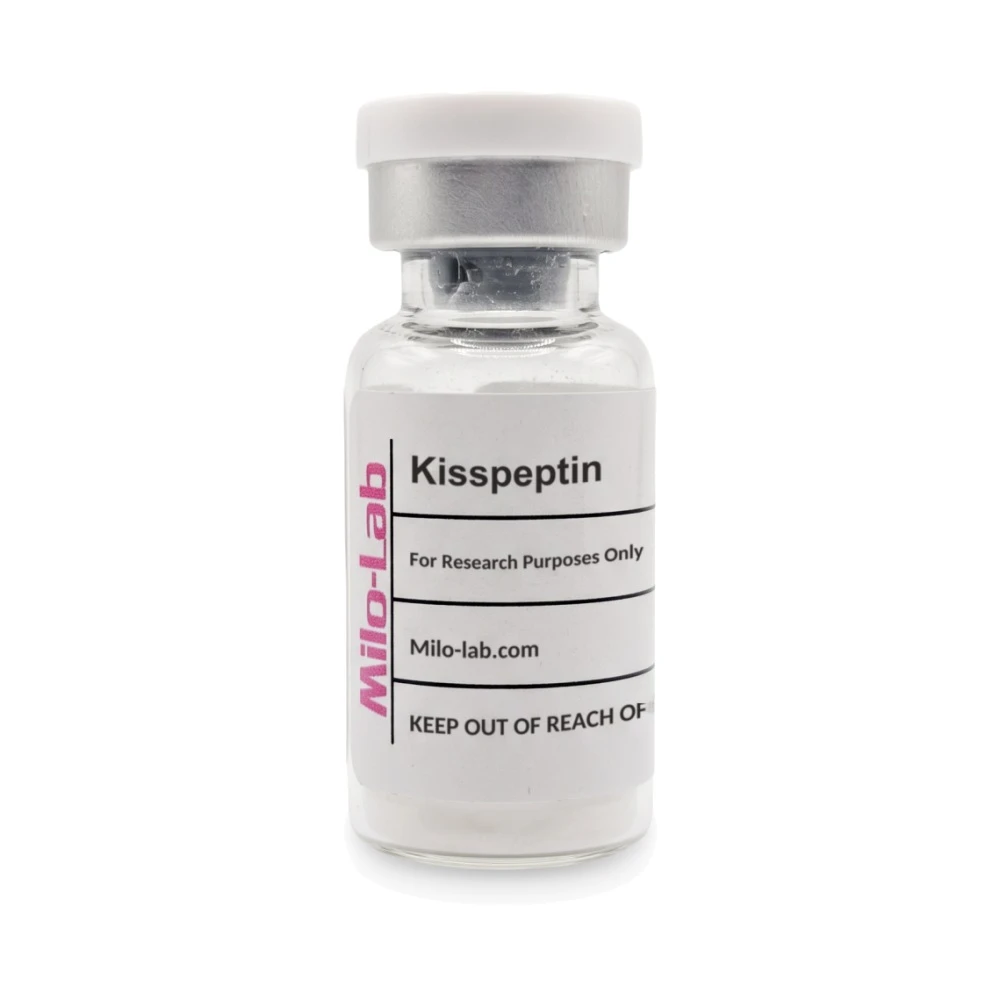
Kisspeptin
Kisspeptin-10 is the C-terminal decapeptide of the KISS1-encoded neuropeptide kisspeptin and a GPR54 (Kiss1R) agonist acting on hypothalamic GnRH neurons.
1 vial · 5 mg total
Checking availability…
Total Price
฿700


 & more more: Bancontact, Open Banking, Cash App, Afterpay, more coinsCrypto −5%Encrypted checkout
For research & laboratory use only. Not for human consumption.
Shipping: free within Thailand, ฿700 worldwide. Added at checkout. Delivery times & countries
Half-Life
~4 minutes (plasma)
GnRH Pulse Generator
GPR54 agonist acting on hypothalamic GnRH neurons
HPG Axis Signalling
Acts upstream of pituitary gonadotroph LH and FSH release
Limbic Signalling
Activity in limbic and hypothalamic circuits
Mechanism of Action
Research Overview
Kisspeptin-10 engages the GPR54 receptor on hypothalamic GnRH neurons, the natural control point of the hypothalamic-pituitary-gonadal (HPG) axis. That makes it a probe for studies on GPR54 receptor pharmacology, GnRH pulsatility and gonadotropin (LH/FSH) signalling.
The KNDy Neuron Oscillator
The kisspeptin neurons that govern pulsatile GnRH release are the KNDy neurons (Kisspeptin / Neurokinin B / Dynorphin) of the arcuate nucleus (ARC) in the hypothalamus. Three co-expressed signals create the rhythm:
- Kisspeptin is the output signal, activating GnRH neurons through GPR54.
- Neurokinin B (NKB) acts as the auto-synchroniser, hitting NK3R on neighbouring KNDy neurons so the population fires its kisspeptin burst together.
- Dynorphin is the auto-inhibitor, acting on the kappa-opioid receptor (KOR) to shut each burst down and reset the cycle.
Together this oscillator sets the roughly 60 to 90 minute pulse interval of GnRH secretion.
Receptor-Level Signalling Sequence
- Kisspeptin-10 binds GPR54 on GnRH neurons.
- GnRH is released into the pituitary portal circulation.
- Pituitary gonadotrophs respond with release of LH.
- Pituitary gonadotrophs also release FSH, with smaller amplitude and slower kinetics.
Research Areas
- HPG axis signalling studies
- GnRH pulse-generator mapping
- GPR54 (Kiss1R) receptor pharmacology
Kit Contents and Storage
Milo-Lab supplies kisspeptin-10 as lyophilised 5mg vials, offered as a single vial or as 25mg (5 x 5mg) and 50mg (10 x 5mg) kits.
Lyophilised vials: store at -20°C, protected from light.
For research purposes only. Not for human consumption.
Product FAQs
Related Products
Research Tools