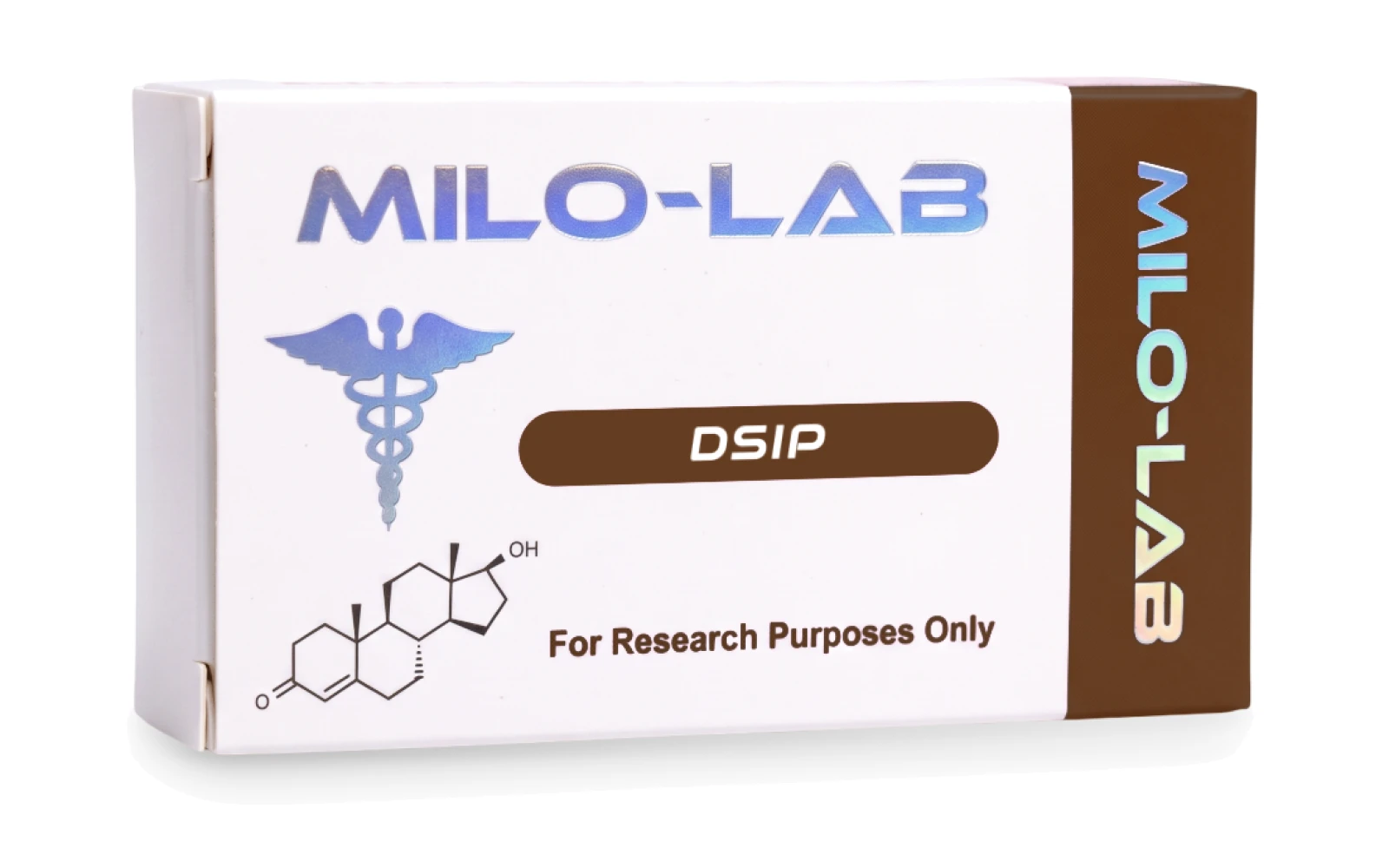
DSIP
DSIP is an endogenous nonapeptide (Trp-Ala-Gly-Gly-Asp-Ala-Ser-Gly-Glu), studied in hypothalamic-pituitary-adrenal (HPA) axis and neuroendocrine research.
1 vial · 5 mg total
Checking availability…
Total Price
฿900


 & more more: Bancontact, Open Banking, Cash App, Afterpay, more coinsCrypto −5%Encrypted checkout
For research & laboratory use only. Not for human consumption.
Shipping: free within Thailand, ฿700 worldwide. Added at checkout. Delivery times & countries
Half-Life
~30 minutes
Nonapeptide Structure
Trp-Ala-Gly-Gly-Asp-Ala-Ser-Gly-Glu, first isolated from the cerebral venous blood of rabbits
HPA Axis Modulation
Studied for hypothalamic-pituitary-adrenal signalling in rodent and cell models
Neuroendocrine Models
Studied for LH pulsatility and growth-hormone axis signalling in rodent models
Mechanism of Action
What DSIP Is
DSIP is a naturally occurring nonapeptide with the sequence Trp-Ala-Gly-Gly-Asp-Ala-Ser-Gly-Glu, first isolated from the cerebral venous blood of rabbits. It has a half-life of roughly 30 minutes and is supplied here as a single 5mg research vial.
Studied Pathways
HPA axis: In rodent and cell models, DSIP is reported to modulate cortisol release after stress. The pattern in the literature is modulation of stress reactivity rather than global suppression, since adrenal steroidogenesis under resting conditions is not meaningfully affected.
GH axis: DSIP is reported to modulate somatotroph activity, and several reports describe altered GH pulsatility.
LH pulsatility: DSIP is reported to influence luteinizing hormone pulse patterns in neuroendocrine models.
NK cell activity: In some models DSIP modulates natural killer cell cytotoxicity.
Research Areas
- HPA axis models and stress-physiology research
- Cortisol reactivity in rodent and cell models
- Neuroendocrine signalling (GH and LH axes)
- Neuropeptide structure and stability studies
Storage
Lyophilised vials: store at 2-8°C.
For research purposes only. Not for human consumption.
Product FAQs
Customer Reviews
Excellent service and products
Related Products
Selank
Selank is a synthetic heptapeptide (Thr-Lys-Pro-Arg-Pro-Gly-Pro), a stabilised tuftsin analogue, studied for GABAergic modulation and BDNF expression.
Pinealon
Pinealon (Glu-Asp-Arg, EDR) is a Khavinson short-peptide bioregulator studied for AANAT and Nrf2-dependent gene expression in cell models.
Research Tools