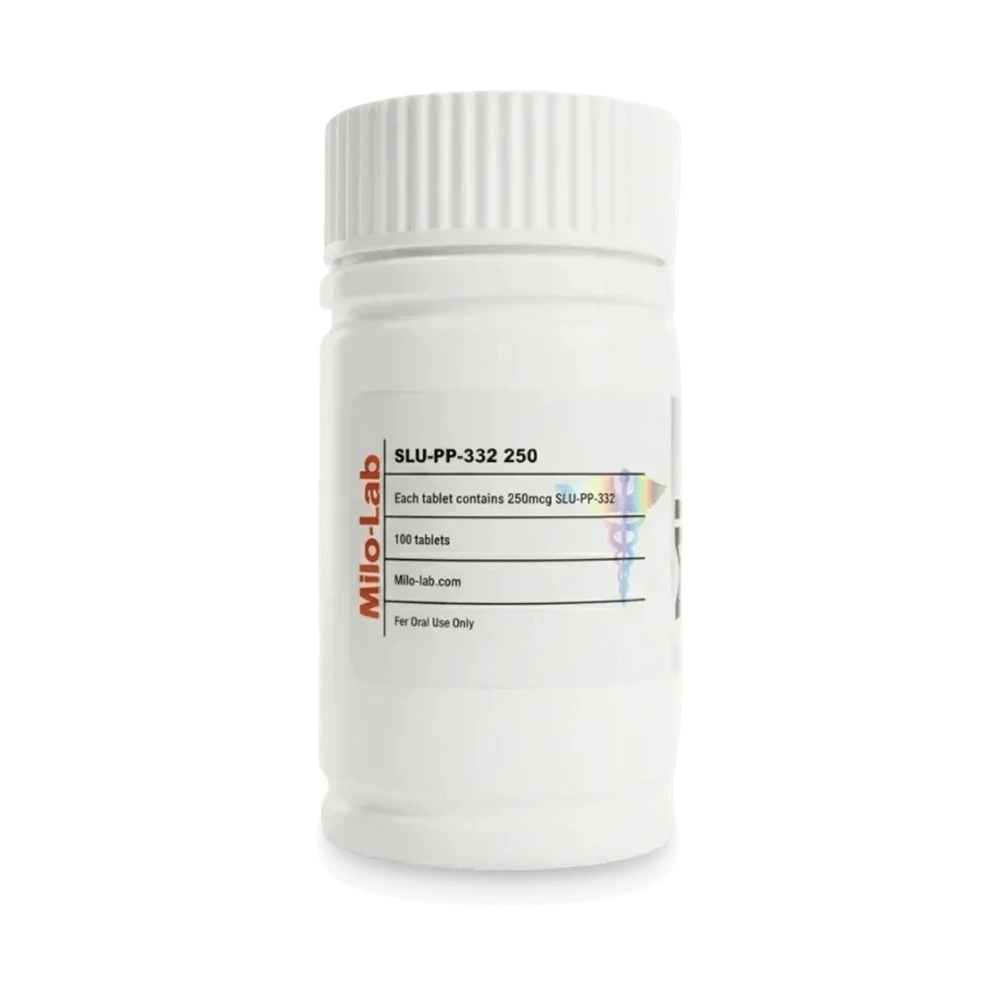
SLU-PP-332
SLU-PP-332 is a synthetic small-molecule agonist of the estrogen-related receptors ERR alpha, beta and gamma, studied in nuclear-receptor research.
1 vial · 5 mg total
Checking availability…
Total Price
฿1700


 & more more: Bancontact, Open Banking, Cash App, Afterpay, more coinsCrypto −5%Encrypted checkout
For research & laboratory use only. Not for human consumption.
Shipping: free within Thailand, ฿700 worldwide. Added at checkout. Delivery times & countries
Half-Life
~1-3 hours
PGC-1 Alpha Pathway
Transcriptional coactivator programme studied in preclinical models
Mitochondrial Gene Programmes
Mitochondrial biogenesis and fatty-acid oxidation transcripts in preclinical models
Nuclear Receptor Agonist
Binds ERR alpha, beta and gamma, not a cell-surface receptor
Mechanism of Action
Why Researchers Choose SLU-PP-332
SLU-PP-332 is a synthetic estrogen-related receptor (ERR) pan-agonist. It binds ERR alpha, beta and gamma and is studied in nuclear-receptor transcription and in the PGC-1 alpha coactivator pathway that governs oxidative-metabolism gene expression. Research interest centres on:
- Mitochondrial biogenesis gene programmes in preclinical models
- ERR-mediated transcription of oxidative-metabolism genes in preclinical work
- Fatty-acid oxidation pathways downstream of nuclear-receptor activation
- PGC-1 alpha coactivator interaction with ERR family members
- Comparison of nuclear-receptor transcription with cell-surface receptor signalling
Because SLU-PP-332 acts through nuclear-receptor transcription, it is a mechanistically distinct tool compared with GLP-1 or GLP-1/GIP peptides.
ERR Signalling
ERR receptors are orphan nuclear receptors that coordinate the transcription of genes for oxidative phosphorylation, mitochondrial assembly and fatty-acid catabolism. In preclinical models, engagement of ERR by SLU-PP-332 is associated with:
- Amplification of the PGC-1 alpha coactivator program
- Increased markers of mitochondrial biogenesis
- A shift in gene expression towards fatty-acid oxidation
Storage
Lyophilised vials: store at -20°C, protected from light. Capsule packs: store in a cool, dry place away from light.
For research purposes only. Not for human consumption.
Product FAQs
Related Products
Semax
Semax is a synthetic heptapeptide (Met-Glu-His-Phe-Pro-Gly-Pro) built on the ACTH(4-7) fragment, studied for BDNF and NGF expression in laboratory models.
Selank
Selank is a synthetic heptapeptide (Thr-Lys-Pro-Arg-Pro-Gly-Pro), a stabilised tuftsin analogue, studied for GABAergic modulation and BDNF expression.
NAD+
NAD+ (nicotinamide adenine dinucleotide) is the central redox coenzyme and a substrate for sirtuin and PARP enzymes. Research compound.
Research Tools