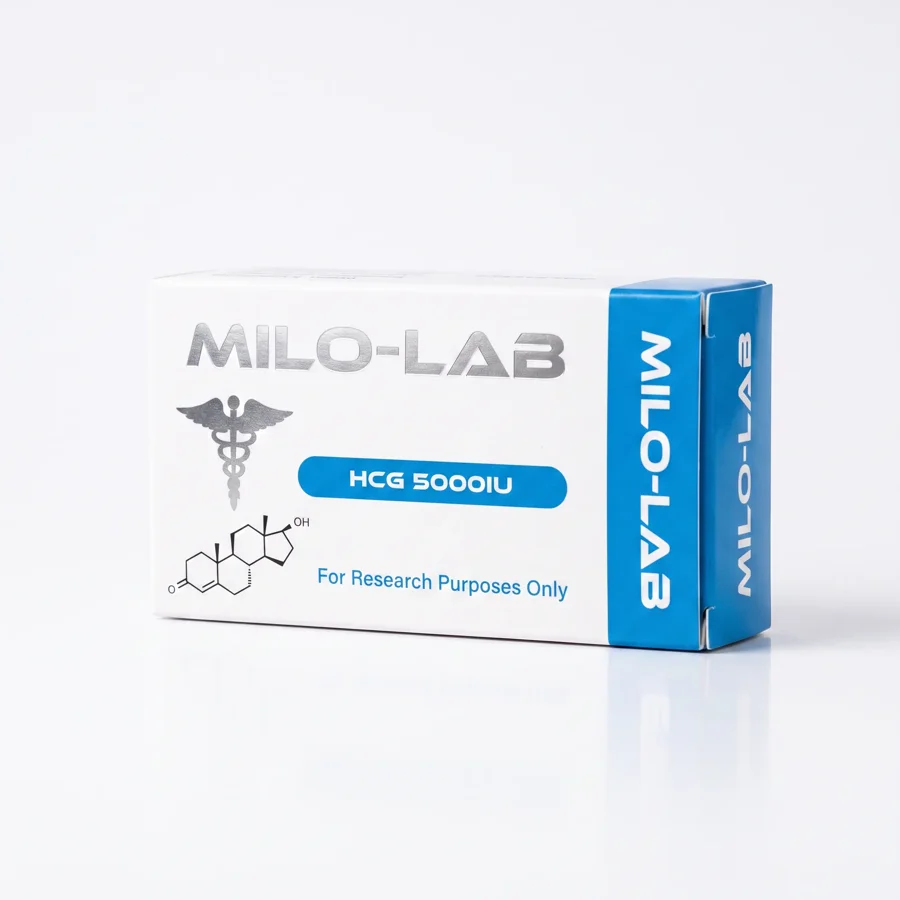
HCG
HCG is a luteinising-hormone analog that binds testicular LH receptors, driving Leydig-cell testosterone output in HPG-axis research.
Total Price
฿900
Prefer Revolut, Wise or PayPal?
For research & laboratory use only. Not for human consumption.
Shipping: free within Thailand, ฿700 worldwide. Added at checkout. Delivery times & countries
Half-Life
~36 hours (terminal; biphasic elimination, initial phase ~11 hours)
Administration Route
Subcutaneous or intramuscular injection after reconstitution
LH-Receptor Agonist
Binds LHCGR directly on Leydig cells — bypasses the pituitary
Long-Acting Stimulus
Sialylated structure gives hours of signalling vs. LH’s short pulses
Maintains Intratesticular T
Sustains ITT under gonadotropin suppression (Coviello 2005)
Effect Timeline
Serum testosterone rise measurable within hours of a single dose
Sustained LH-receptor occupancy — basis for every-other-day protocols
Intratesticular testosterone endpoints assessed in suppression models
Leydig-cell reserve and spermatogenesis markers evaluated
Start — Hours 0-24
Serum testosterone rise measurable within hours of a single dose
Days 2-3
Sustained LH-receptor occupancy — basis for every-other-day protocols
Weeks 2-4
Intratesticular testosterone endpoints assessed in suppression models
Weeks 4-12
Leydig-cell reserve and spermatogenesis markers evaluated
Mechanism of Action
Scientific Research
Expert Rev Endocrinol Metab (2021)
Fertil Steril (2014)
Why Researchers Study HCG
Human chorionic gonadotropin (HCG) is a glycoprotein gonadotropin that acts as a long-acting analog of luteinising hormone. Its beta subunit is close enough to LH’s to bind the same receptor, but its carbohydrate structure makes it clear far more slowly — so a single dose produces hours of steady LH-like signalling where endogenous LH would deliver short pulses. That property makes HCG the reference probe for the gonadal end of the hypothalamic-pituitary-gonadal (HPG) axis.
Where kisspeptin acts at the very top of the axis (hypothalamic GnRH neurons), HCG bypasses the hypothalamus and pituitary entirely and stimulates the testis directly. Researchers use the two at opposite ends of the same axis.
Mechanism of Action
HCG binds the LH/CG receptor (LHCGR) on Leydig cells. Receptor activation couples through Gs to adenylyl cyclase, raising cAMP and activating protein kinase A. PKA drives StAR-mediated transport of cholesterol into the mitochondrion — the rate-limiting step of steroidogenesis — followed by enzymatic conversion through pregnenolone to testosterone.
The key endpoint in most HCG literature is not serum testosterone but intratesticular testosterone (ITT), which sits far above serum levels and is what spermatogenesis actually requires. Coviello et al. (2005) showed that low-dose HCG maintains ITT in men whose gonadotropins were experimentally suppressed by exogenous testosterone, and Roth et al. (2010) mapped a dose-dependent ITT response down to doses as low as 15–125 IU every other day.
Research Context
Investigational literature uses HCG in three main settings: as a stimulation test for Leydig-cell reserve (measuring the testosterone response to a single dose), as a maintenance stimulus in gonadotropin-suppression models where endogenous LH is absent, and in fertility research on spermatogenesis. Its long receptor occupancy is the reason protocols dose every other day or a few times weekly rather than daily.
Handling & Reconstitution
Supplied as a lyophilised powder in a 5000 IU vial. Reconstitute with bacteriostatic water, added slowly against the vial wall rather than directly onto the pellet, and swirl gently instead of shaking — HCG is a glycoprotein and vigorous agitation can denature it. Store lyophilised vials refrigerated; once reconstituted, keep at 2–8 °C and protected from light. A 5000 IU vial reconstituted with 2ml of bacteriostatic water yields 2500 IU/ml, so a 250 IU research dose corresponds to 0.1ml (10 units on a U-100 insulin syringe).
Dosing at a Glance
Route
Subcutaneous or intramuscular injection after reconstitution
Frequency
2-3x weekly
Typical research dose
250–1000 IU
Opens the calculator with this peptide preselected. Research reference only.
Product FAQs
Customer Reviews
Excellent product description, ultra fast delivery, non invasive communication. Top marks!
It seems to work a naturally restore LH levels
Stacks Well With
Related Products
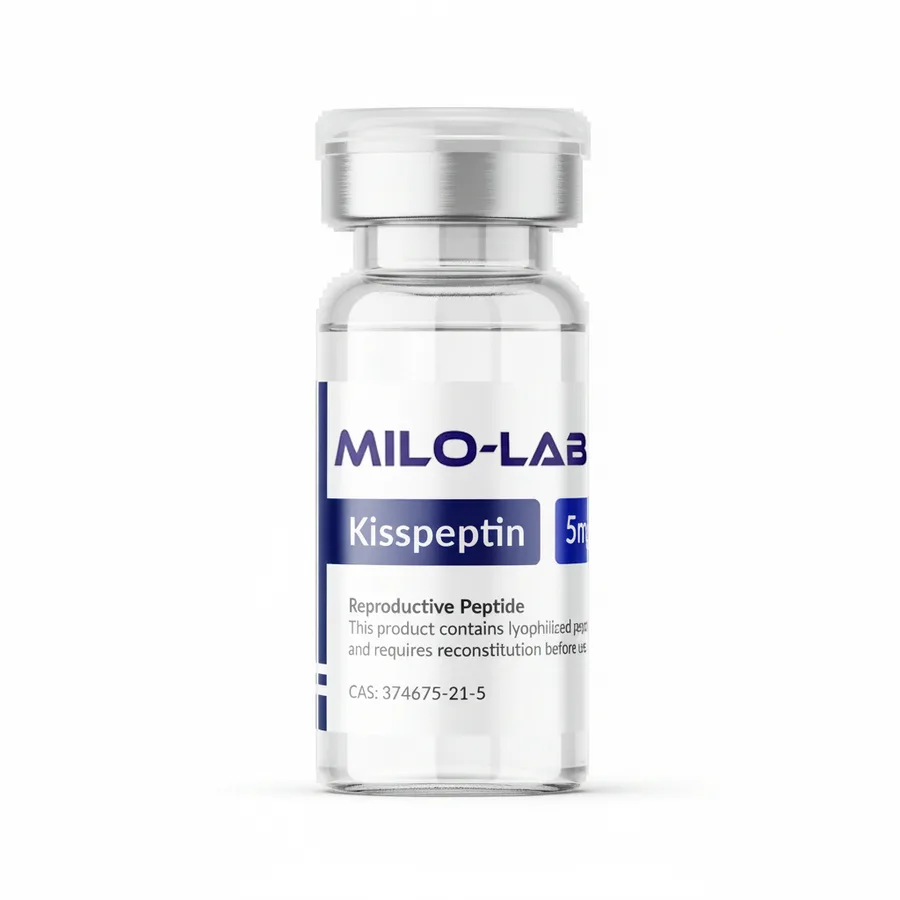
Kisspeptin
Kisspeptin-10 is a GPR54-activating neuropeptide that drives pulsatile GnRH release, raising LH, FSH and testosterone in human reproductive research.
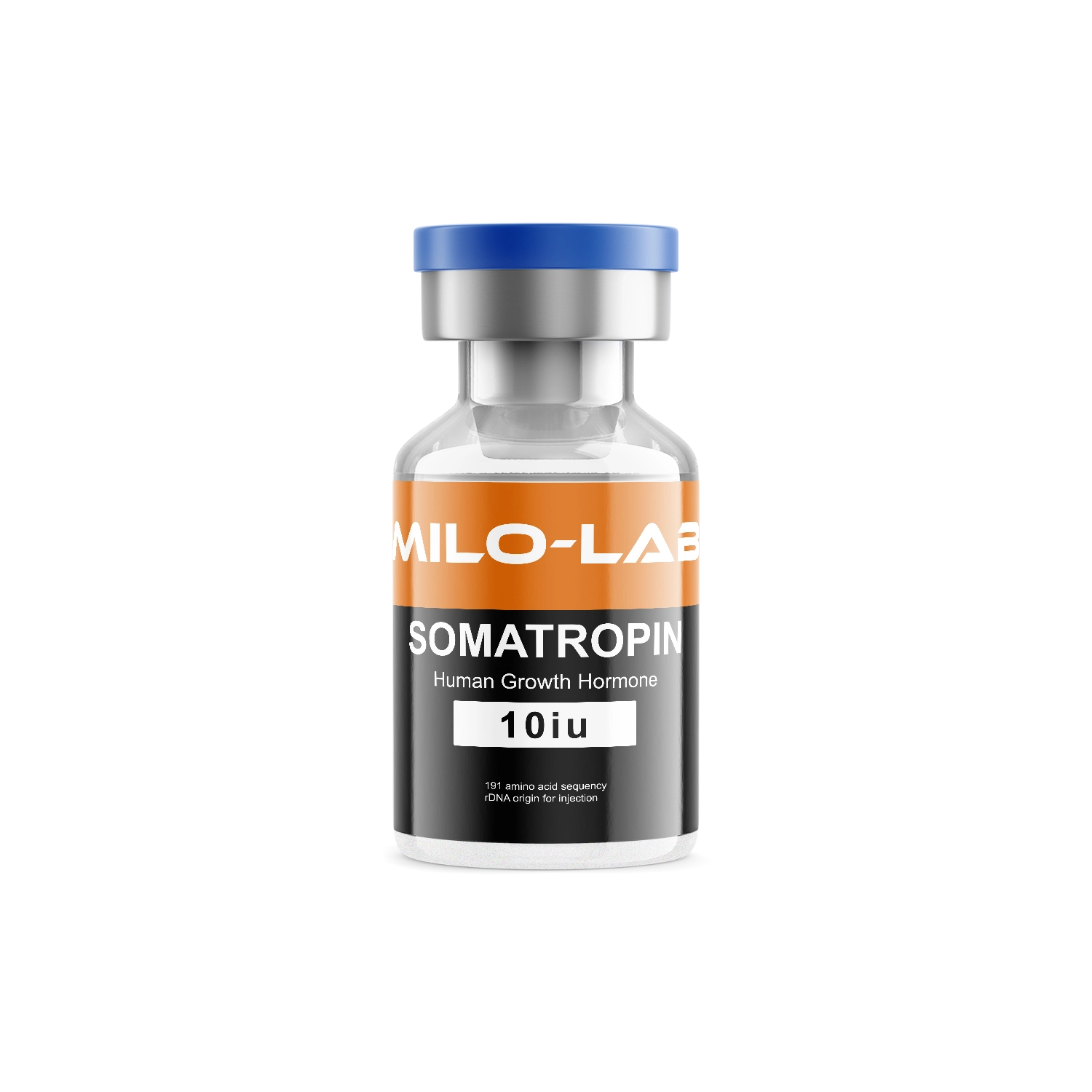
Somatropin
Somatropin is recombinant 191-amino-acid human growth hormone (rHGH), the reference compound for GH/IGF-1 axis, body-composition, and tissue-repair research.