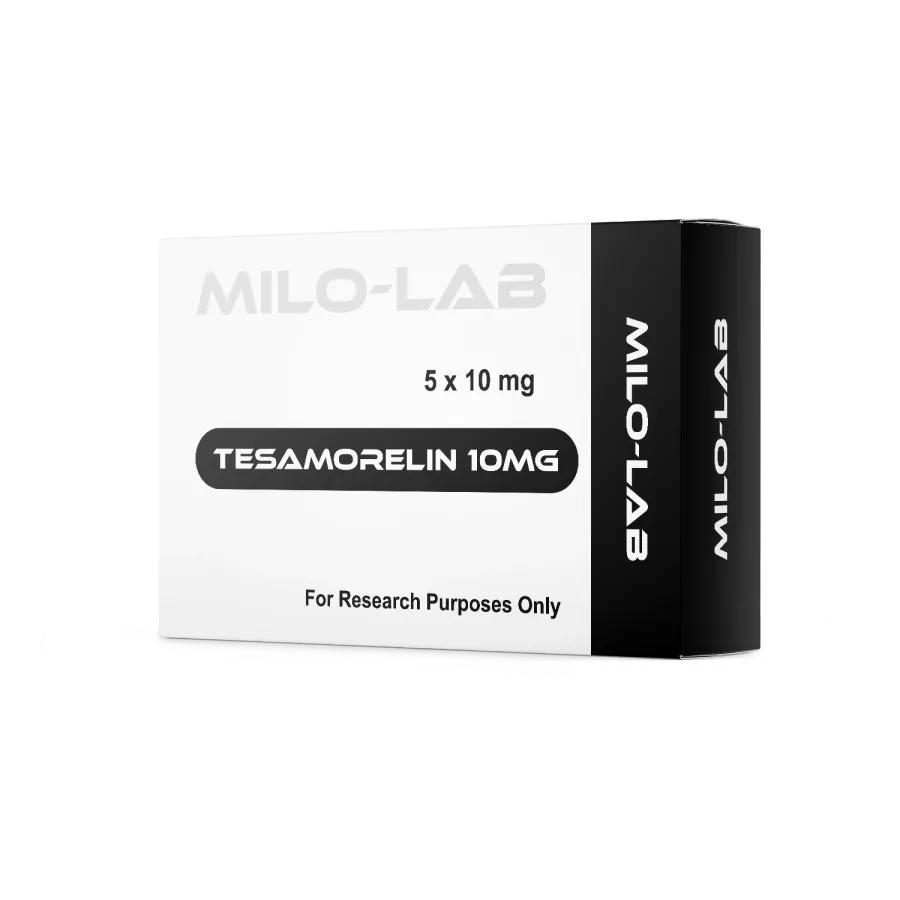
Tesamorelin
Tesamorelin (Egrifta) is an FDA-approved GHRH(1-44) analogue that stimulates natural growth hormone release to drive visceral fat loss and IGF-1 production.
Total Price
฿1900
Prefer Revolut, Wise or PayPal?
For research & laboratory use only. Not for human consumption.
Shipping: free within Thailand, ฿700 worldwide. Added at checkout. Delivery times & countries
Half-Life
~26-38 minutes
Administration Route
Subcutaneous injection
Visceral Fat Reduction
Only peptide FDA-approved specifically for abdominal fat
HIV Lipodystrophy
Approved for antiretroviral-induced lipodystrophy
Cardiovascular Benefit
Reduces triglycerides and carotid IMT alongside fat loss
Effect Timeline
Visceral fat reduction begins; GH levels elevated
Measurable abdominal fat loss; IGF-1 normalised
15–20% visceral fat reduction; triglycerides declining
Maximum fat loss achieved; cardiovascular risk markers improved
Start — Week 4
Visceral fat reduction begins; GH levels elevated
Week 8
Measurable abdominal fat loss; IGF-1 normalised
Week 16
15–20% visceral fat reduction; triglycerides declining
Week 24
Maximum fat loss achieved; cardiovascular risk markers improved
Mechanism of Action
Scientific Research
Why Researchers Choose Tesamorelin
Tesamorelin is the only growth-hormone-releasing-hormone analogue to win FDA approval (as Egrifta), which makes it the most clinically validated GHRH peptide available for research. Its appeal is that it raises the body’s own pulsatile growth hormone rather than supplying exogenous GH, keeping the hormonal profile physiological and feedback-regulated. Common research uses include:
- Visceral adipose tissue (VAT) reduction and tissue-selective lipolysis studies
- Growth hormone and IGF-1 axis investigations using a pulsatile GHRH stimulus
- Lipid-profile and cardiovascular risk-marker research (triglycerides, carotid IMT)
- Age-related growth hormone decline and body-composition protocols
- Cognitive function studies in mild cognitive impairment
Clinical Validation
The tesamorelin Phase 3 programme ran two double-blind, randomised, placebo-controlled trials enrolling a combined total of more than 800 HIV-positive patients with lipodystrophy. The primary endpoint was visceral adipose tissue measured by CT scan, and the active arm achieved roughly 15 to 18 percent VAT reduction against placebo by 26 weeks, alongside meaningful improvements in lipid profiles and patient-reported outcomes. No other GHRH research peptide carries an evidence base of comparable depth.
Mechanism: Growth-Hormone-Driven Visceral Lipolysis
Tesamorelin triggers pulsatile growth hormone release by activating the GHRH receptor on pituitary somatotrophs. The released growth hormone then acts on visceral adipocytes through a defined cascade:
- Growth hormone binds the GH receptor and triggers JAK2-STAT5 signalling
- Hormone-sensitive lipase (HSL) is activated via the PKA pathway
- Lipolysis rises and free fatty acids are released
- Adipocyte sensitivity to insulin-stimulated lipogenesis declines
Visceral fat responds more strongly to this growth-hormone-driven lipolysis than subcutaneous fat, which accounts for the tissue-specific reduction seen in the trials.
Expanding Research: Cognition
A 2019 randomised trial (Baker et al., JCEM) reported that tesamorelin improved executive function, verbal memory, and overall cognitive composite scores in older adults with mild cognitive impairment (MCI). The authors proposed that GH and IGF-1 effects on neuronal metabolism and amyloid processing underlie the benefit, pointing to research applications well beyond the approved indication.
Reconstitution and Storage
Reconstitution: use bacteriostatic water; swirl gently until fully dissolved, do not shake. After reconstitution: store refrigerated and use within 30 days.
For research purposes only. Not for human consumption.
Further Reading
Dosing at a Glance
Route
Subcutaneous injection
Frequency
Once daily
Typical research dose
1–2 mg
Opens the calculator with this peptide preselected. Research reference only.
Product FAQs
Customer Reviews
1mg before bed now and fat is melting away. Great price for this product, Milo, thank you!